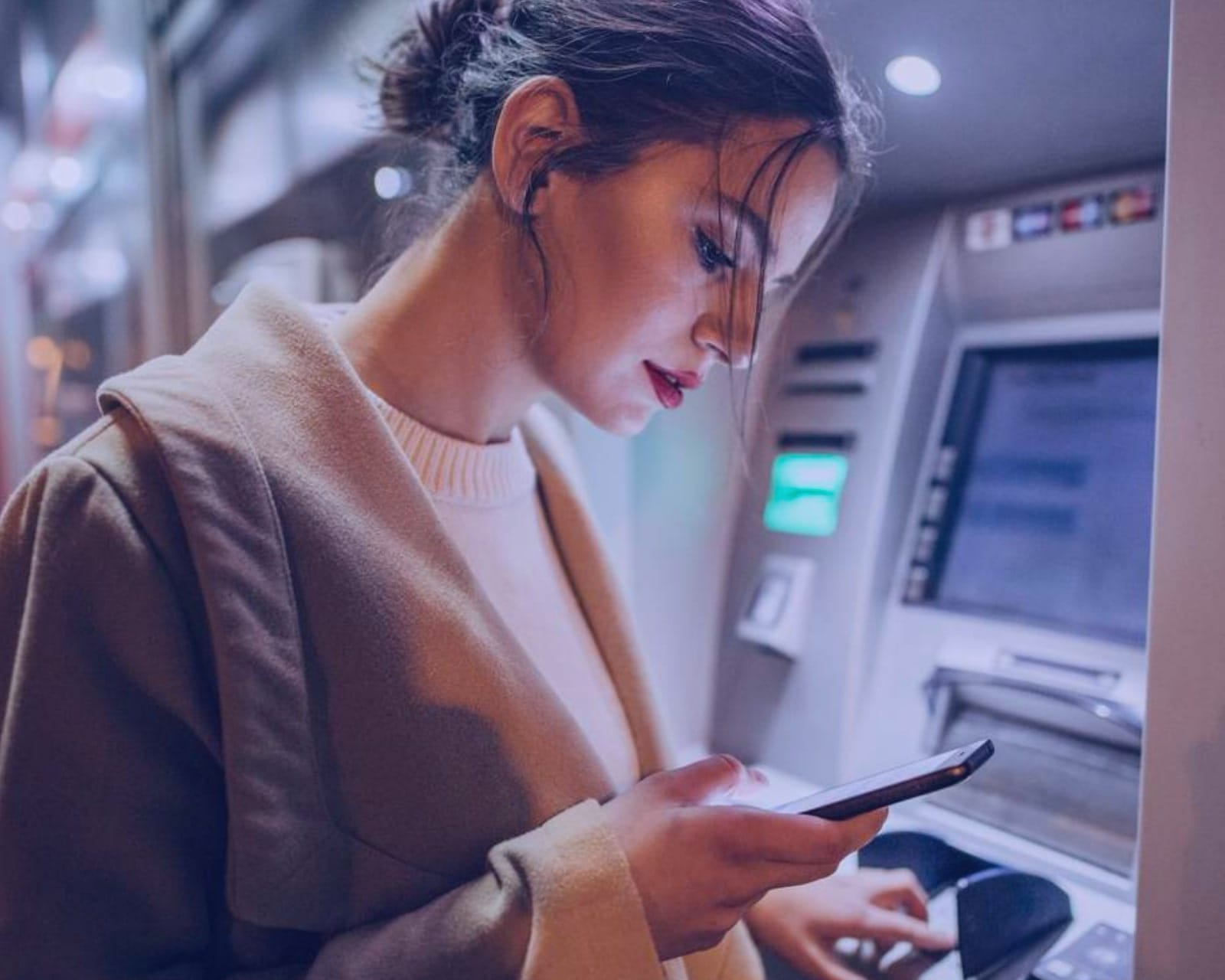
For many customers, the ATM is still the most tangible part of their relationship with a bank. It's where they go when they need something simple to "just work" — cash, a quick balance check, a payment, or reassurance that their money is where it should be.
When we stepped into this project, the bank already sensed something was off. Complaints were rising, branch staff were spending more time explaining ATM flows than solving real problems, and customer research kept surfacing the same sentiment in different words: the ATMs felt old, confusing, and, at times, intimidating.
What we discovered on the ground was more than an outdated interface. It was a whole ecosystem of unseen friction — cognitive, operational, and emotional.
Understanding the Real Problem
We spent time where the ATM actually lives: on busy streets, in malls, outside branches, in smaller neighbourhood clusters. We watched people interact with the machines during the day, late at night, in a hurry, under harsh sunlight, with kids next to them, with shopping bags in one hand and a card in the other.
Three truths surfaced quickly:
- Customers were working harder than the machine to get things done.
- The interface assumed a level of digital literacy and comfort that many users simply didn't have.
- The experience was designed around transactions, not around people.
Elderly users squinted and leaned in, unsure which button to press next. People with mobility issues struggled with screen height and timing. Tech-savvy customers tapped impatiently through long, redundant flows that felt like a step backwards from the app experience they used daily.
On the operational side, support teams were seeing recurring issues: abandoned transactions, mistaken choices, failed flows that turned into branch visits and call-center load. Accessibility advocates had raised concerns. Yet all of these signals were treated as isolated incidents rather than symptoms of the same design problem.
The challenge wasn't just to make the ATM "look modern." The challenge was to realign a critical touchpoint with how people actually live, think, move, and bank.
Designing an Experience That Respects Context, Ability, and Time
We approached the redesign with one guiding principle: every interaction at an ATM happens under some form of pressure — time, environment, emotion, or all three.
That meant the new experience had to be:
- immediately understandable,
- forgiving when people hesitated or made mistakes, and
- consistent enough that once learned, it never surprised the user again.
We rebuilt key flows — such as withdrawals, balance checks, transfers, and bill payments — to follow a simple, linear logic. Each screen had a single, clear purpose. Choices were grouped in a way that matched how people think, not how systems are structured. Language was stripped of internal jargon and rewritten in terms a real customer would use.
But "simple" wasn't the full answer. This bank serves a broad spectrum of customers across age, ability, and comfort with technology. So inclusivity had to be engineered into the experience from the start.
We looked at accessibility from multiple angles: screen contrast and legibility under difficult lighting, button and target sizes for different hand movements, audio guidance support for users with visual impairments, physical affordances like braille prompts and tactile cues, and timing behaviours that gave people enough space to complete tasks without feeling rushed.
The ATM experience stopped being "just a UI" and became a blended physical-digital environment that respected the realities of its users.
Connecting the ATM to the Larger Banking Ecosystem
Redesigning the ATM in isolation would have been a missed opportunity.
We aligned the new flows with the bank's mobile and online journeys so that customers didn't have to relearn how to bank every time they switched channels. Transaction types, terminology, and visual patterns were brought into closer harmony with the broader digital ecosystem.
On the operational side, we worked with internal teams to ensure that telemetry and behavioural data from ATMs could be used to improve the experience over time — identifying where people dropped off, where they hesitated, and which tasks caused repeated friction.
The ATM became more than a machine. It became a live source of behavioural insight that could inform future CX decisions.
The Impact
The change wasn't subtle. Over time, the bank observed fewer ATM-related complaints, fewer unnecessary branch visits caused by failed or confusing flows, and a noticeable improvement in how confidently customers completed tasks.
For differently-abled and elderly customers, the ATM became more usable, not just "less difficult." For digital-native users, the experience now felt closer to the modern banking journeys they already knew. For branch teams, there was one less friction point generating noise and frustration.
In tangible terms, the redesign translated into:
- faster completion of everyday transactions,
- more equitable access for customers with different abilities, and
- reduced operational strain on branches and support teams.
But beyond metrics, the most meaningful change was psychological: the ATM started to feel like a reliable extension of the bank's promise, not a legacy artifact customers had to endure.
Why This Matters
ATMs are often treated as infrastructure — necessary, functional, but rarely revisited with true design intent. Yet for many customers, especially in this region, they remain a primary, high-frequency touchpoint with the bank.
This project reminded us that customer experience is never about a single screen, device, or channel. It's about how all of those touchpoints work together to deliver clarity, confidence, and dignity.
When you redesign an ATM with the same care you'd give to an app or a branch, you send a quiet but powerful message: every interaction with your bank matters — including the ones that happen in the middle of a busy day, standing at a screen, with no one there to help you but the design itself.
That is the standard Sygneo brings to every touchpoint we work on.